

Most investors are debating rate cuts…
Or chasing AI earnings revisions…
Or rotating through whatever narrative is trending this quarter…
Meanwhile, capital is quietly repositioning somewhere far less glamorous.
Back into the materials the world can’t function without.
And, while this isn’t obvious yet… it will be. Very soon…
The Pattern Most Investors Miss
Every commodity cycle begins the same way.
Not with excitement. Not with headlines. But with indifference.
The early stage of a real asset cycle feels boring. It feels premature. It feels like… nothing is happening.
But markets are already signaling something different beneath the surface.
Gold moved first.
That wasn’t nostalgia. It wasn’t momentum. It was repricing.
Repricing sovereign debt expansion…
Repricing monetary dilution….
Repricing geopolitical fragmentation.
Gold doesn’t speculate. It arbitrages trust.
Silver followed…
Not because it’s fashionable, but because it sits at the intersection of money and manufacturing.
When both begin tightening simultaneously, silver rarely stays idle.
Precious metals were the opening act.
Now, the broader complex is clearing its throat…
You Can Financialize Narratives. Not Physics.
For more than a decade, markets rewarded abstraction.
Platform economics. Synthetic leverage. Balance-sheet engineering layered on top of balance-sheet engineering…
Globalization masked bottlenecks. Cheap energy masked inefficiencies. Supply chains felt permanent.
But they weren’t…
Every technological leap still depends on extracted materials.
Data centers require copper.
Power grids require zinc.
Defense systems require tungsten.
Energy systems require fuel.
And if you can’t grow it, you mine it.
So, if you underinvest in mining, the adjustment doesn’t happen gradually. It happens structurally.
We’re entering that phase now…
Copper Doesn’t Hype. It Signals.
Copper is rarely speculative. Instead, it’s diagnostic…
Electrification.
Grid expansion.
Data infrastructure.
Automation.
Defense upgrades.
These are not optional projects. They are prerequisites.
Yet supply growth has lagged for years.
Permitting friction. Capital discipline imposed after the last downturn. Political resistance to new extraction.
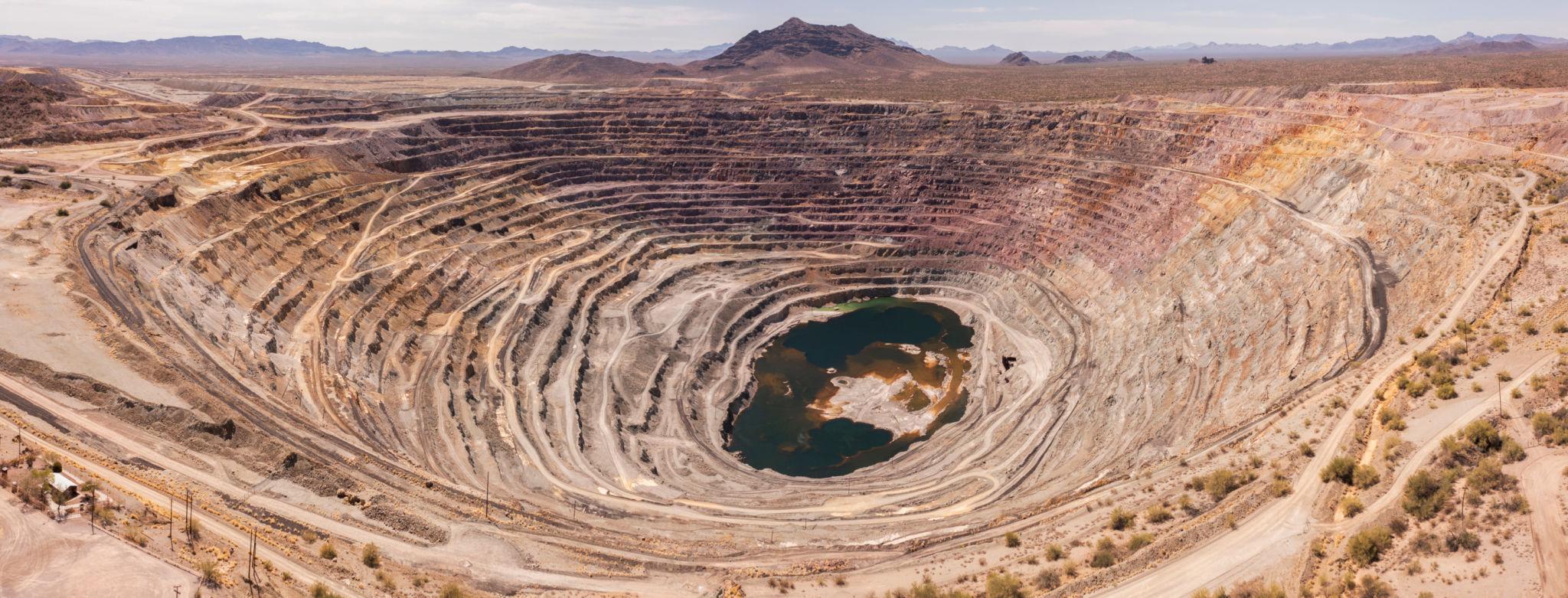
New mines require a decade or more. Sometimes longer.
Demand adjusts quickly. Supply doesn’t.
That imbalance is how long commodity advances begin.
Quietly…. Then persistently.
Energy Is Still the Foundation
Every economic forecast assumes reliable energy.
Every transition plan assumes stable baseload power.
Energy is politically debated. But it is economically non-negotiable.
Natural gas remains essential to grid stability. Oil remains embedded in transportation and logistics. Industrial production remains energy intensive.
Yet capital expenditure across traditional energy remains constrained relative to structural demand.
Markets love to misprice what they politically dislike.
Energy does not need enthusiasm. It just needs sustained demand and insufficient reinvestment.
That combination is quietly forming again.
Allocation Is the Tell
Despite all this, institutional portfolios remain historically light on commodities.
Many diversified strategies treat them as optional. Younger investors often have little to no exposure.
This is not a warning sign.
It is early-cycle behavior.
When an asset class is underowned, even modest reallocation can move price disproportionately—especially when supply can’t respond elastically.
Capital isn’t loudly rotating yet.
It is quietly positioning.
And that’s an important difference.
Scarcity Is Becoming Strategic
The era of frictionless supply chains is ending.
Countries learned that dependence is vulnerability.
Stockpiles are rising. Export controls are tightening. Long-term offtake agreements are locking up production.
Commodities are no longer just inputs.
They’re leverage.
That shift changes valuation dynamics…
Markets begin pricing security premiums, not just marginal supply-demand balances.
Strategic materials rarely revert to “cheap” once they’re recognized as strategic.
The Materials No One Talks About
Some of the most important materials remain almost invisible to investors.
Tungsten… Critical for defense systems and high-temperature manufacturing.
Barite… Essential to drilling operations that underpin energy security.
Zinc… The quiet protector of global infrastructure through galvanization.
These are not speculative stories.
They are structural necessities.
When scarcity intersects with strategic importance, pricing power emerges gradually—then decisively.
Super Cycles Begin with Neglect
Commodity super cycles don’t announce themselves.
They begin with:
- Underinvestment
- Capital discipline
- Public indifference
- A widespread belief that technology has replaced physical constraints
Then demand proves durable… Supply proves slow… And pricing adjusts.
We’re still early in that adjustment.
Precious metals signaled monetary strain.
Industrial metals are responding to infrastructure reality.
Energy remains structurally undercapitalized.
The market moved before the narrative arrives.
And that’s typical…
Before the Crowd Rediscovers the Physical World
This isn’t about chasing headlines.
It is about recognizing that the global economy is being repriced through the lens of scarcity again.
The physical world is asserting itself after years of being treated as “solved.”
This is positioning, not speculation.
The crowd will participate later—once performance validates the shift.
Early positioning never feels comfortable.
It feels quiet. Still, we encourage you to…
Stay early. Stay sovereign. And stay on the right side of history.
To owning what’s real,

Jason Williams
Senior Investment Strategist, Gold World